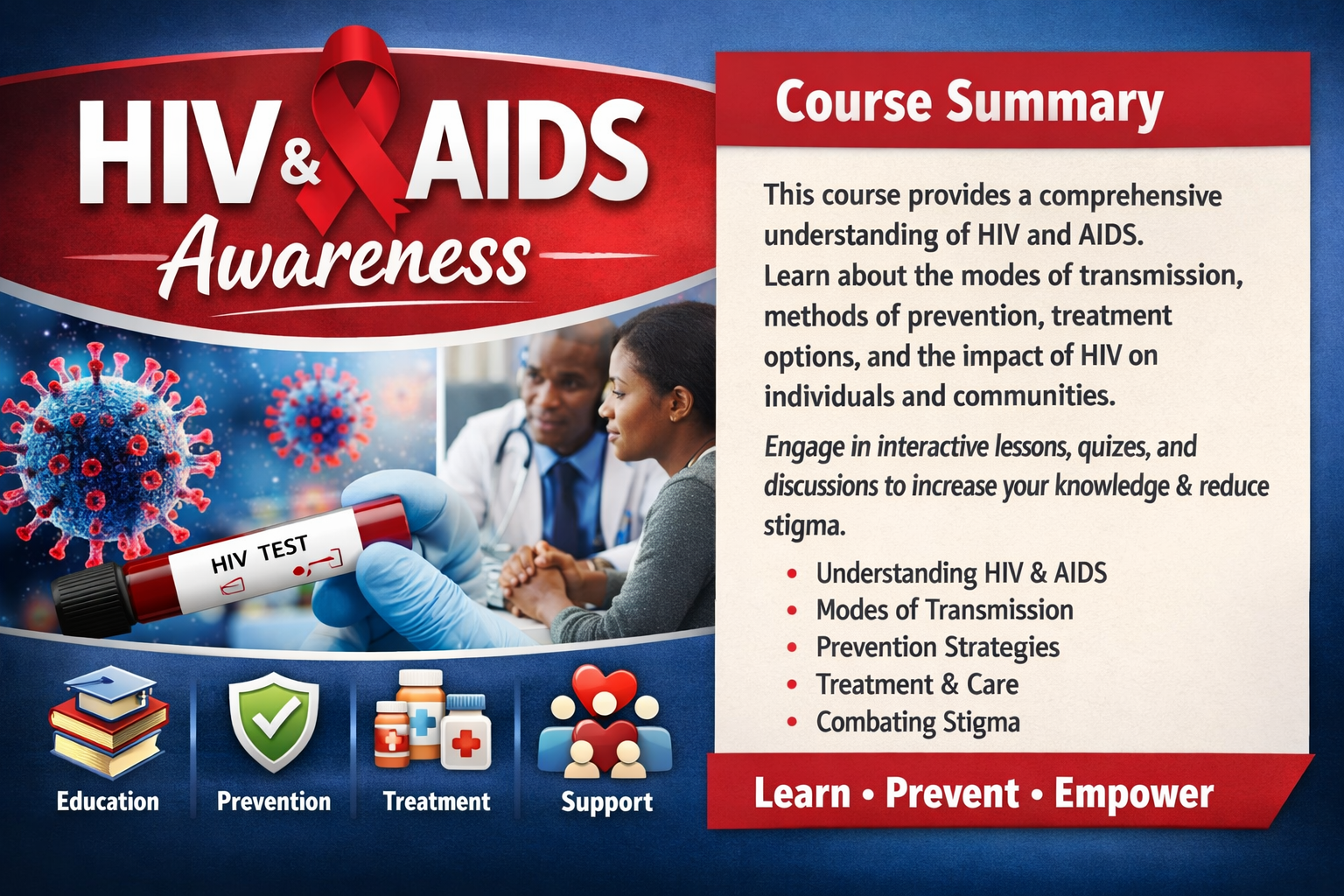
This course provides a comprehensive introduction to HIV and AIDS, equipping students with accurate knowledge, practical skills, and a deeper understanding of the impact of the disease on individuals and communities. It explores the biological, social, and behavioral aspects of HIV, with a strong focus on prevention, treatment, and stigma reduction.
Students will learn about the modes of HIV transmission, effective prevention strategies, and the importance of early testing and treatment. The course also examines the role of antiretroviral therapy (ART) in managing HIV and improving quality of life.
Through interactive lessons, discussions, and assessments, learners will be encouraged to challenge common myths and misconceptions, promote responsible decision-making, and develop positive attitudes towards people living with HIV.
By the end of this course, students will be empowered to make informed choices, advocate for awareness, and contribute to reducing the spread and stigma of HIV in their communities.
- Teacher: Admin User